
Concrete is one of the strongest and most widely used construction materials in the world. It forms the foundations of homes, office buildings, shopping centres, warehouses, factories, bridges, hospitals, and countless other structures. While concrete is designed for strength and durability, there are many situations where it needs to be modified after construction has been completed.
New doorways need to be created. Service penetrations need to be installed. Buildings need to be expanded. Structures need to be altered to accommodate changing requirements. In many cases, sections of concrete must be removed without damaging the surrounding structure.
This is where concrete cutting becomes essential.
Concrete cutting is one of the most important specialised services within the construction industry. It allows contractors to modify concrete structures accurately, safely, and efficiently while maintaining the integrity of the remaining building.
Whether the project involves a residential renovation, a commercial fit-out, an industrial upgrade, or a large infrastructure project, concrete cutting provides the precision required to make structural changes without relying on destructive demolition methods.
Understanding what concrete cutting is and when it is needed can help property owners, contractors, engineers, and project managers make informed decisions when planning construction and renovation projects.
Discuss Your Concrete Cutting Requirements
Fill in the form below and receive professional advice and a no-obligation quotation tailored to your project requirements.
What Is Concrete Cutting?
Concrete cutting is the process of using specialised equipment to cut, drill, or remove concrete in a controlled and precise manner.
Unlike traditional demolition methods that rely on force to break concrete apart, concrete cutting focuses on accuracy. Diamond cutting equipment is typically used to create clean cuts through concrete, reinforced concrete, masonry, asphalt, and other construction materials.
Modern concrete cutting techniques allow contractors to modify structures with minimal vibration, reduced noise, and far greater precision than conventional demolition methods.
This makes concrete cutting suitable for projects where structural integrity must be maintained and where surrounding areas need to remain protected during construction.
The service is used across virtually every sector of the construction industry because it provides a practical way to alter existing structures without unnecessary disruption.
Why Is Concrete Cutting Needed?
Buildings and infrastructure rarely remain unchanged throughout their lifespan.
As businesses expand, technology evolves, and building requirements change, existing structures often need to be modified. Concrete cutting makes these modifications possible.
A commercial office may require new openings to create larger workspaces. A shopping centre may need structural alterations to accommodate a new tenant. A factory may require new service routes for upgraded machinery. A homeowner may wish to remove walls, enlarge openings, or extend an existing structure.
In all of these situations, concrete cutting provides a controlled method of modifying the structure while preserving surrounding areas.
Concrete cutting is also frequently used during maintenance and repair projects. Damaged sections of concrete may need to be removed and replaced without affecting the rest of the structure. Infrastructure assets such as bridges and tunnels often require modifications that can only be achieved through specialist cutting methods.
Without concrete cutting, many modern renovation and construction projects would be significantly more difficult, more disruptive, and more expensive to complete.
Common Types of Concrete Cutting
Concrete cutting is not a single service. Several specialised methods are used depending on the structure, access conditions, and project requirements.
The most common techniques include wall sawing, floor sawing, core drilling, and wire sawing. Each method serves a specific purpose and is selected according to the nature of the work being performed.
Choosing the correct cutting method is one of the most important parts of any project because it affects efficiency, safety, accuracy, and overall project outcomes.
Wall Sawing
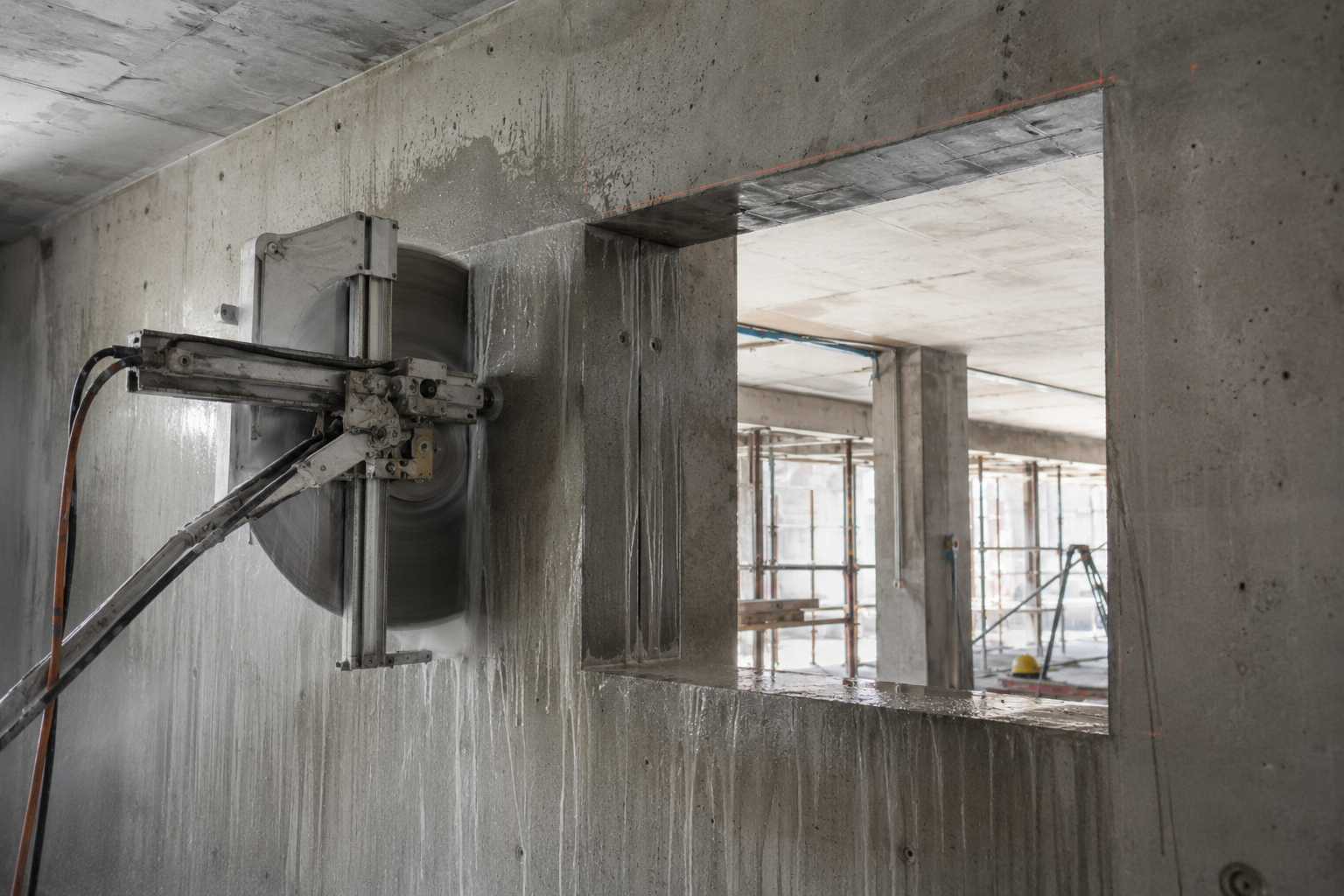
Wall sawing is used to create precise openings in vertical concrete structures.
This method uses a diamond blade mounted on a track-guided system to make accurate cuts through walls, columns, and other vertical elements. Wall sawing is commonly used when creating door openings, window openings, lift shaft modifications, and structural alterations within buildings.
Because the equipment is mounted directly onto the structure, wall sawing provides exceptional accuracy and allows contractors to create clean openings with minimal disruption.
Wall sawing is particularly useful during renovation projects where specific sections of a wall must be removed while preserving surrounding areas.
Projects involving large openings often require careful planning, and understanding what affects the cost of wall sawing can help property owners prepare realistic budgets before work begins.
Floor Sawing
Floor sawing is designed for horizontal surfaces such as concrete slabs, roads, pavements, warehouse floors, and industrial yards.
This method uses a powerful saw fitted with a diamond blade to cut through concrete and asphalt at controlled depths.
Floor sawing is commonly used for expansion joints, trenching work, road repairs, service installations, and structural modifications within slabs.
One of the major advantages of floor sawing is its ability to create long, straight cuts efficiently. This makes it particularly useful on projects where large surface areas need to be modified.
Industrial facilities, distribution centres, airports, and infrastructure projects frequently rely on floor sawing as part of broader construction and maintenance programmes.
Core Drilling
Core drilling is used to create circular openings through concrete walls, floors, and ceilings.
Unlike wall sawing and floor sawing, which create linear cuts, core drilling produces perfectly round openings that can accommodate services such as plumbing, electrical conduits, HVAC systems, drainage pipes, and fire protection infrastructure.
Modern core drilling equipment can produce highly accurate openings with minimal vibration and limited disruption to surrounding structures.
Core drilling is one of the most frequently used services on renovation and construction projects because almost every building requires service penetrations at some stage.
When planning service installations, it is often useful to understand core drilling costs in Gauteng so that drilling requirements can be incorporated into the overall project budget from the outset.
Wire Sawing
Wire sawing is one of the most specialised forms of concrete cutting.
Instead of using a circular blade, wire sawing relies on a continuous diamond wire that is threaded around the structure being cut. This allows contractors to cut through extremely thick and heavily reinforced concrete sections that would be difficult or impossible to remove using conventional saws.
Wire sawing is commonly used on bridges, dams, industrial foundations, marine structures, tunnels, and large infrastructure projects.
Because the cutting depth is not limited by blade diameter, wire sawing can handle some of the largest and most challenging concrete structures found within the construction industry.
Large structural modification projects often rely on wire sawing when conventional cutting methods are no longer practical.
Concrete Cutting for Renovation Projects
Renovations are among the most common reasons concrete cutting services are required.
Many renovation projects involve modifications to existing structures rather than entirely new construction. This means contractors must work within the constraints of the existing building while creating openings, installing services, or altering layouts.
Concrete cutting allows these changes to be made accurately without causing unnecessary damage to surrounding structures.
For example, a commercial office renovation may require new doorways, additional service routes, and structural modifications to support a revised floor plan. A residential renovation may involve enlarging openings, removing walls, or creating access for new plumbing installations.
These projects often involve a combination of wall sawing, core drilling, and controlled demolition techniques.
Understanding these requirements early can make a significant difference when budgeting for concrete alterations on renovation projects and can help reduce the likelihood of unexpected costs later in the construction process.
Concrete Cutting for Commercial and Industrial Projects
Commercial and industrial facilities often present unique challenges that require specialist cutting solutions.
Factories, warehouses, processing plants, shopping centres, and office buildings frequently undergo modifications to accommodate new equipment, changing operational requirements, or expansion projects.
Unlike new construction, these projects often take place within occupied or operational environments. Businesses may continue operating while modifications are being carried out, making precision and planning particularly important.
Concrete cutting provides a practical solution because it allows structural modifications to be completed with minimal disruption compared to more aggressive demolition methods.
Industrial projects can also involve substantial reinforced concrete structures that require specialised cutting techniques. Equipment foundations, retaining walls, machine bases, and structural slabs often require careful planning before modifications can be performed safely.
Why Precision Matters
Precision is one of the most important benefits of modern concrete cutting.
Traditional demolition methods can introduce vibration, increase the risk of unintended damage, and create challenges when working within existing structures. Concrete cutting offers a far more controlled approach.
Accurate cuts help maintain structural integrity while reducing the amount of corrective work required after modifications are completed.
Precision also improves project efficiency. Clean openings are easier to work with, reduce waste, and simplify subsequent construction activities.
This becomes particularly important in hospitals, office buildings, shopping centres, apartment complexes, and industrial facilities where disruptions must be kept to a minimum.
The ability to modify concrete accurately is one of the primary reasons specialist cutting methods have become standard practice throughout the construction industry.
Need Expert Advice on Your Project?
Fill in the form below and our team will assess your requirements and recommend the most effective concrete cutting solution.
Why Specialist Contractors Matter
Concrete cutting may appear straightforward from the outside, but successful projects require far more than specialised equipment.
Every project involves different structural conditions, reinforcement levels, access restrictions, and safety considerations. Selecting the correct cutting method requires experience and a thorough understanding of how structures behave.
Specialist contractors assess the project before work begins and determine the most appropriate approach. They evaluate the structure, identify potential challenges, plan removal sequences, and ensure that cutting activities can be completed safely and efficiently.
This becomes particularly important when working with heavily reinforced concrete structures. Reinforcement increases cutting complexity and is one of the reasons reinforced concrete costs more to cut or core than standard concrete structures.
Many projects also combine multiple services. A structural modification may require wall sawing, core drilling, and controlled demolition activities to achieve the desired result. Coordinating these services effectively helps reduce delays and improves project outcomes.
Key Factors That Influence Project Complexity
While every project is different, several factors commonly influence the complexity of concrete cutting work:
- Concrete thickness
- Reinforcement levels
- Access restrictions
- Structural requirements
- Project location
- Occupied versus vacant buildings
- Waste removal requirements
- Safety considerations
Understanding these factors helps explain why project requirements can vary significantly from one site to another.
Understanding Concrete Cutting Starts With Understanding the Project
Concrete cutting is one of the most versatile and important services within the construction industry. It provides a safe, precise, and efficient way to modify concrete structures without relying on destructive demolition methods.
Whether the project involves creating openings, installing services, altering layouts, or removing structural sections, concrete cutting allows these changes to be completed with accuracy and control.
From wall sawing and floor sawing to core drilling and wire sawing, each method plays an important role in helping buildings and infrastructure adapt to changing requirements.
Many projects also form part of broader structural modification programmes where controlled demolition, cutting, and drilling activities work together to achieve the desired result. Understanding these requirements, along with concrete cutting costs in Johannesburg, can help property owners and project managers plan projects more effectively.
By understanding what concrete cutting is and when it is needed, stakeholders can make informed decisions that support safer, more efficient, and more successful construction outcomes.
Request Your Free Concrete Cutting Quote
Fill in the form below and receive professional advice and accurate pricing tailored to your project requirements.