
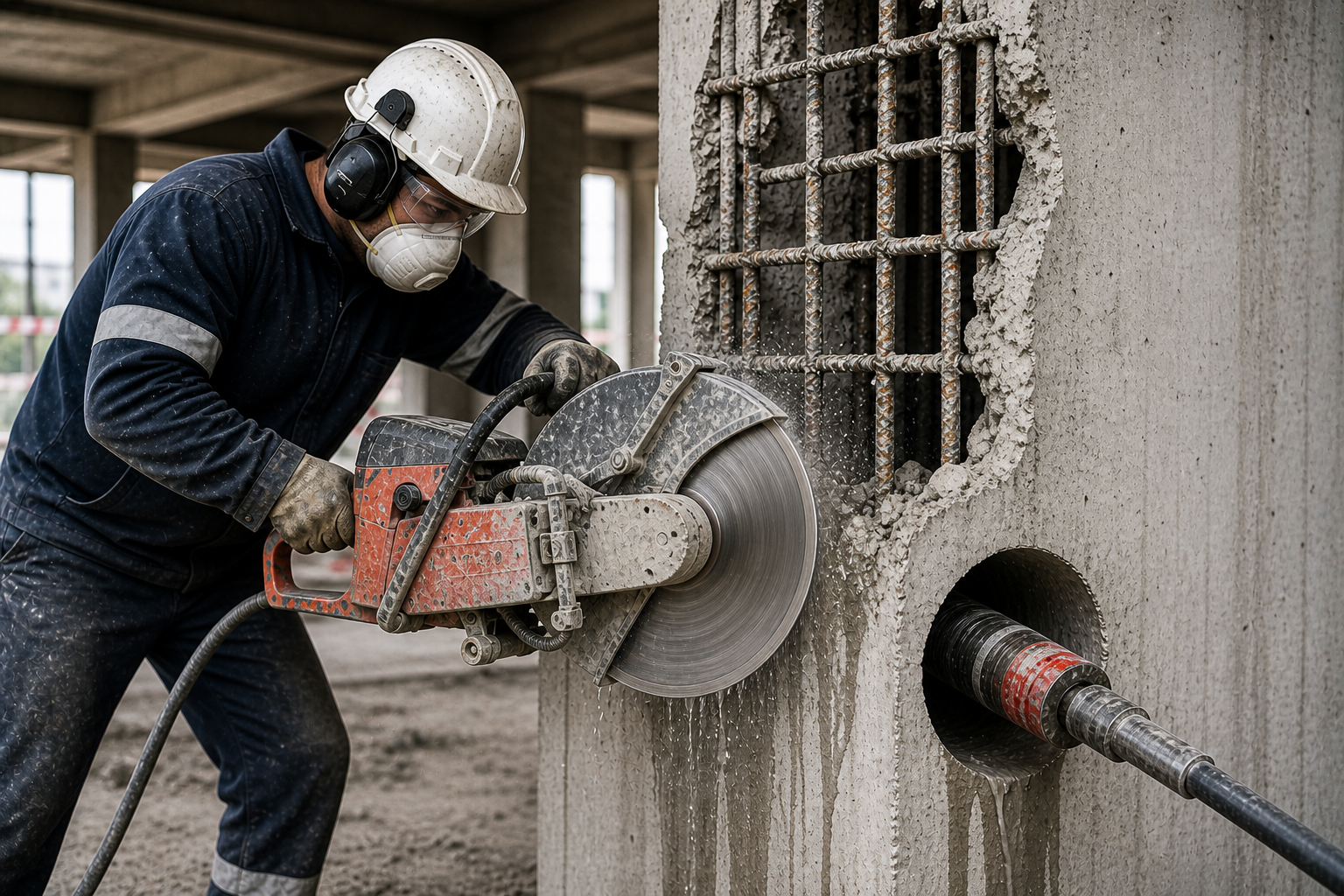
Reinforced concrete is designed for strength. It is used in structural slabs, beams, columns, and load-bearing walls where durability and load capacity are critical.
While this makes it ideal for construction, it also makes it significantly more difficult to work with when modifications are required.
Cutting or core drilling through reinforced concrete is more complex, more time-consuming, and more equipment-intensive than working with standard concrete.
This is why projects that involve reinforced concrete often come with higher costs. The difference is not just in the material itself, but in the tools, techniques, and level of expertise required to complete the job safely and accurately.
Get an Accurate Quote for Reinforced Concrete Cutting or Drilling
Fill in the form below and receive a fast, no-obligation quote tailored to your project.
What Is Reinforced Concrete and Why It Is Harder to Work With
Reinforced concrete contains embedded steel bars, commonly known as rebar, which are added to improve tensile strength. Concrete on its own is strong in compression but weak in tension.
The addition of steel reinforcement allows the structure to handle stress, weight, and movement without cracking or failing.
From a cutting or drilling perspective, this creates a major challenge. Instead of working through a uniform material, the process must handle both dense concrete and hardened steel within the same section.
Each material behaves differently under cutting or drilling conditions.
Concrete can be cut relatively consistently using diamond blades or drill bits. Steel, on the other hand, requires more force and generates more resistance.
When the cutting equipment encounters reinforcement, progress slows down and additional strain is placed on the machinery.
This combination of materials is the primary reason why reinforced concrete is more expensive to cut or core.
It increases time on site, accelerates equipment wear, and requires a higher level of control throughout the process.
The Impact of Steel Reinforcement on Cutting and Drilling Costs
The presence of steel reinforcement changes how the entire job is approached. It affects not only the speed of the work but also the type of equipment used and the level of expertise required.
When cutting through reinforced concrete, diamond blades must be capable of handling both concrete and steel. These blades are more expensive and wear out faster than those used for non-reinforced materials.
As a result, equipment costs are higher and may need to be factored into the quote.
Drilling through reinforced concrete presents a similar challenge. Core drilling bits must be designed to cut through steel without losing accuracy.
When a drill bit hits rebar, it slows down significantly and may require adjustments to maintain alignment. This increases the time needed to complete each hole.
In addition to equipment wear, labour time increases as well. Operators must work more carefully to ensure clean cuts and avoid damaging surrounding structures.
The process cannot be rushed, especially in structural elements where precision is critical.
These factors combined explain why reinforced concrete work is priced higher than standard concrete cutting or drilling.
Equipment Requirements for Reinforced Concrete
Standard cutting tools are not sufficient for reinforced concrete. Specialised equipment is required to handle the density and embedded steel.
High-powered saws and drilling rigs are typically used for this type of work. These machines are designed to maintain consistent performance even when encountering steel reinforcement.
They are more expensive to operate and require regular maintenance to ensure reliability.
Water-cooled systems are often used to reduce heat and control dust during the cutting or drilling process.
This helps protect both the equipment and the surrounding environment, but it also adds to the setup and operational requirements.
In more complex projects, advanced techniques such as wire sawing may be used.
This method is particularly effective for large or heavily reinforced structures, but it requires specialised skills and equipment, which increases the overall cost.
Why Reinforced Concrete Takes Longer to Cut or Core
Time is one of the biggest cost factors in any project. Reinforced concrete takes longer to cut or drill because of the resistance created by the steel reinforcement.
When cutting through standard concrete, progress is relatively steady. In reinforced concrete, the process slows down each time the equipment encounters steel.
This stop-and-start nature increases the overall duration of the job.
Operators must also take additional precautions to maintain accuracy. Cutting too aggressively can damage the equipment or compromise the structure. This means the work must be carried out at a controlled pace.
Longer project durations lead to higher labour costs and increased equipment usage. This is reflected in the final price of the job.
Precision Requirements in Reinforced Concrete Work
Reinforced concrete is often used in critical structural elements. This means that cutting or drilling must be carried out with a high level of precision to avoid weakening the structure.
For example, creating an opening in a reinforced wall requires careful planning to ensure that the load-bearing capacity is not compromised. Similarly, drilling holes for services must be done accurately to avoid damaging reinforcement that is essential to the structure.
This level of precision requires experienced operators who understand how to work with reinforced concrete safely. It also involves careful measurement, alignment, and execution, all of which contribute to the overall cost.
Safety Considerations and Their Impact on Cost
Working with reinforced concrete involves additional safety considerations. The presence of steel reinforcement increases the risk of equipment strain and potential hazards if not handled correctly.
Dust control is essential, especially in indoor environments. Water is often used during cutting and drilling to minimise dust and improve visibility. This requires proper management to prevent water damage or mess on site.
Noise and vibration must also be controlled, particularly in occupied buildings or sensitive environments. These factors may require additional equipment or techniques, which can increase the cost.
Safety measures are not optional. They are an essential part of the process and contribute to the overall pricing of reinforced concrete work.
How Reinforced Concrete Affects Project Planning
Projects involving reinforced concrete require more detailed planning compared to standard concrete work. Understanding the location and density of reinforcement is important before any cutting or drilling begins.
In some cases, scanning equipment may be used to detect embedded steel and services. This helps prevent accidental damage and ensures that the work can be carried out safely.
While this adds to the upfront cost, it reduces the risk of costly mistakes later.
Proper planning also helps improve efficiency. When the scope of work is clearly defined, operators can complete the job more effectively, reducing unnecessary delays.
How to Manage Costs When Working with Reinforced Concrete
While reinforced concrete will always be more expensive to work with, there are ways to manage costs effectively.
- Ensure accurate measurements and locations before work begins
- Provide clear access to the work area
- Combine multiple cuts or holes into one project where possible
- Share detailed project information with the contractor upfront
These steps help reduce inefficiencies and improve overall project execution.
Why Professional Expertise Matters
Reinforced concrete is not a material that should be handled without the right expertise. The combination of concrete and steel requires specialised knowledge and equipment to achieve accurate results.
Professional contractors understand how to approach these projects safely and efficiently. They use the right tools, follow proper techniques, and ensure that the structure remains intact throughout the process.
Poor workmanship can lead to structural damage, delays, and additional costs. Investing in professional services ensures that the job is completed correctly the first time.
How This Impacts Your Project Costs
If your project involves reinforced concrete, it is important to expect higher costs compared to standard concrete work. This is not due to overpricing but rather the additional complexity involved.
Understanding these factors helps you make informed decisions and plan your budget more effectively. It also highlights the importance of working with experienced professionals who can deliver quality results.
For a more detailed breakdown of pricing, you can refer to:
- Concrete cutting cost in Johannesburg
- Core drilling cost in Gauteng
These guides provide additional insight into how pricing is structured and what you can expect for your specific project.
Request a Detailed Quote for Your Project
Provide your project details and get a clear, accurate breakdown of costs before work begins.